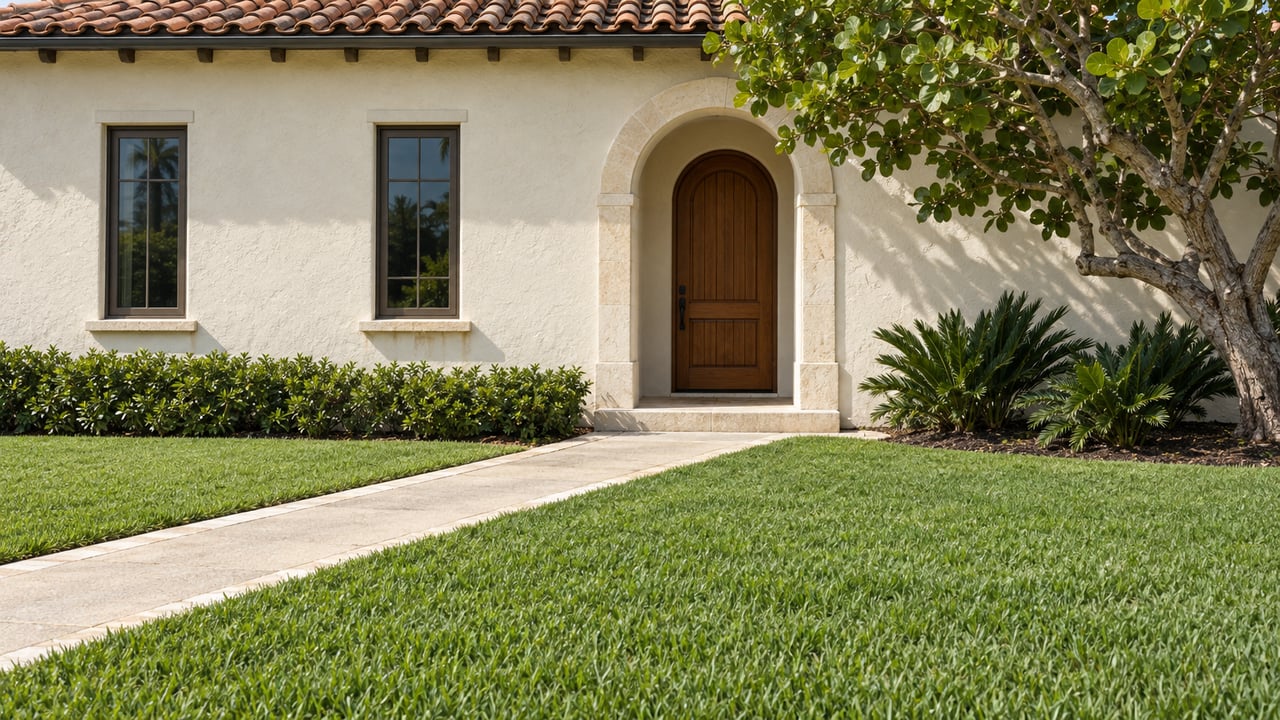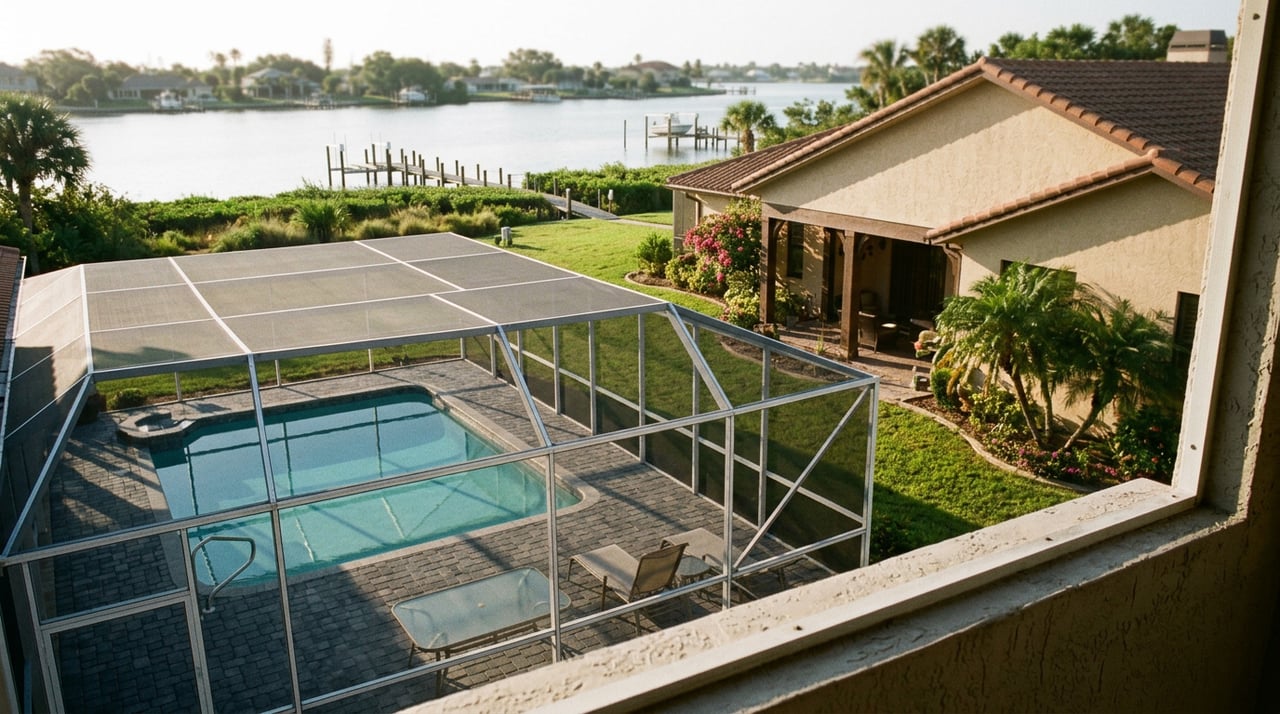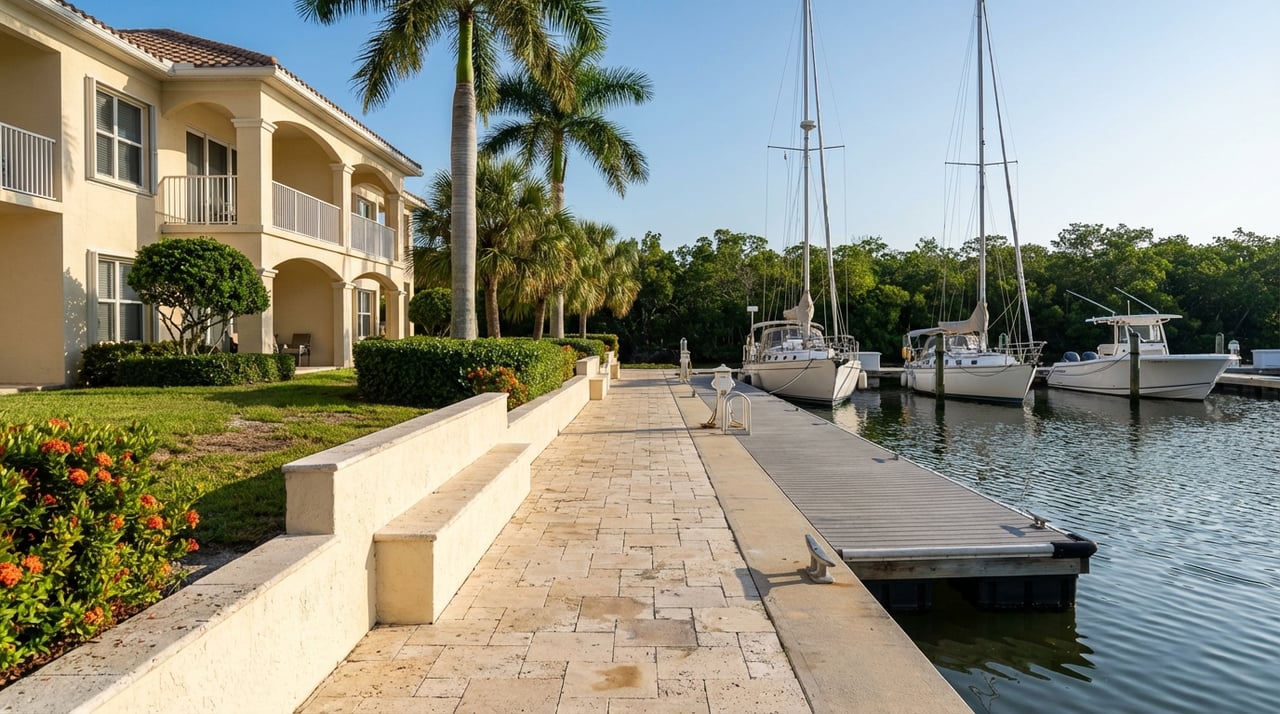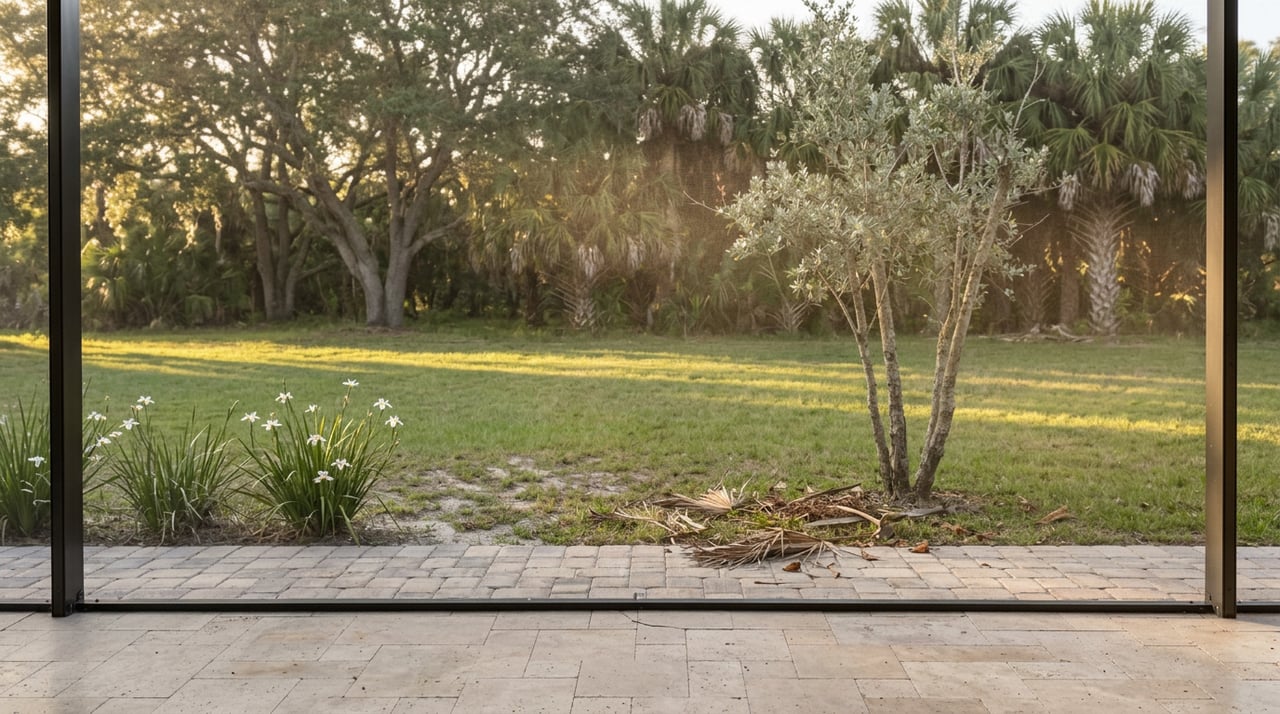
On a Friday evening at the entrance to Burnt Store Meadows, where Royal Poinciana meets US 41, the smoke from a hibachi grill drifts across a patch of association-maintained green belt that on any other night is just the buffer strip behind somebody's back fence. Folding chairs face a food truck window. Kids cut across the grass between parked cars. For three hours, a stretch of mowed lawn functions as the neighborhood's only restaurant.
That is not a charming coincidence. It is the direct result of a corridor that grew rooftops faster than it grew retail, and the shopping center meant to finally close that gap only cleared its first real vote this spring, with the harder part of the process still ahead.
A Green Belt Becomes The Neighborhood's Restaurant Row
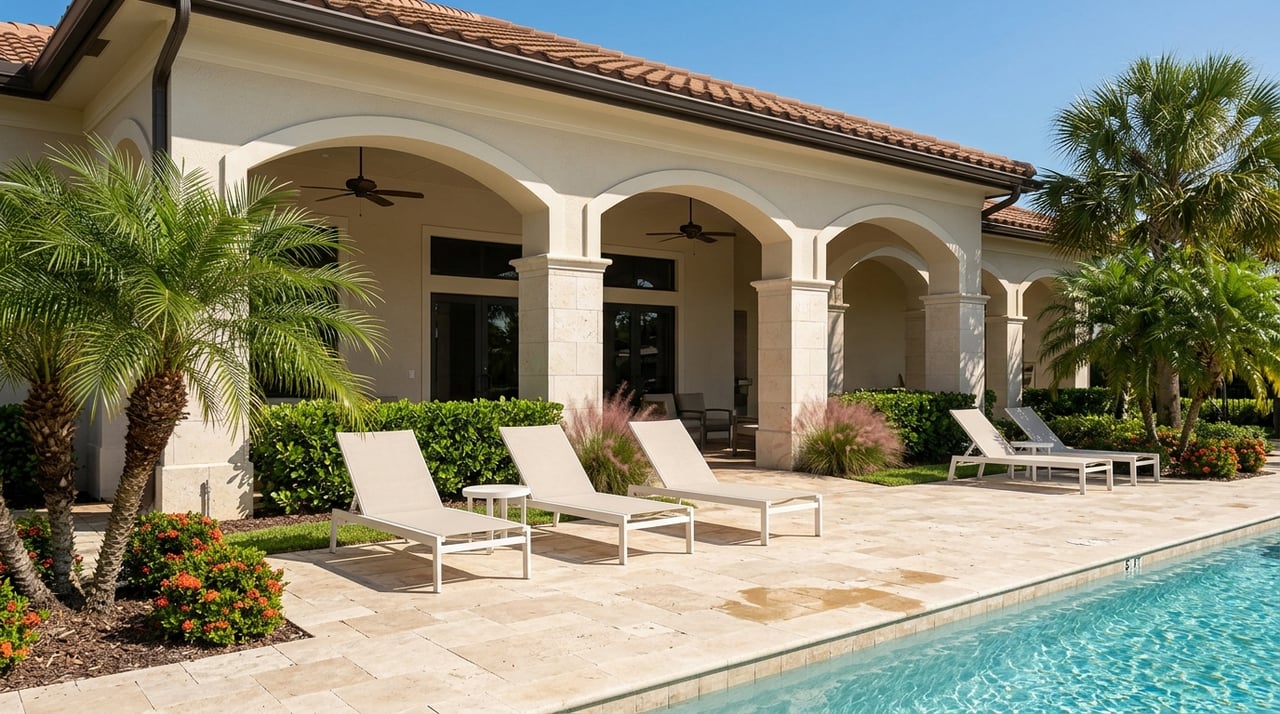
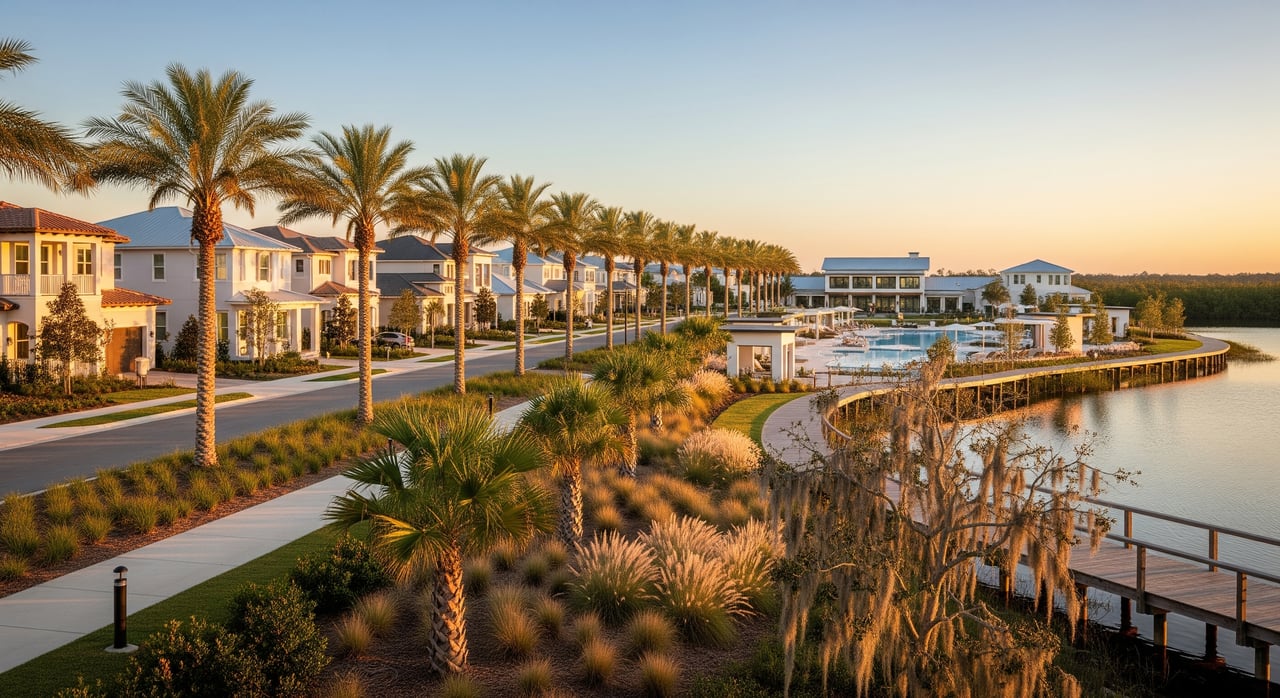
Burnt Store Meadows is built around a network of park-like green belts that run behind every home, maintained by the property owners' association rather than any single homeowner. Most weeks that space is just scenery. On Food Truck Friday nights, organized by the same POA, it becomes the closest thing the community has to a commercial strip.
The rotation is genuinely local, not a franchise parking lot. Past lineups have brought in Buddha-Bachi, a hibachi-style truck, and Mambo, parked at the same Green Belt entrance off Royal Poinciana and US 41 roughly once a month through the cooler stretch of the year, from 4 to 7 in the evening. The same POA has organized a community-wide garage sale in past Februarys and put together a holiday decorating showcase in past Decembers. None of this requires a drive down US 41. That is the point.
It is worth sitting with why a deed-restricted community of single-family homes ended up building its own recurring dinner spot instead of just getting one. The answer has less to do with Burnt Store Meadows itself, which sits close enough to existing shopping that its own POA describes the location as convenient to stores and restaurants, and more to do with the miles of Burnt Store Road stretching north of it, where growth has badly outpaced retail.
The Corridor That Grew Faster Than Its Stores
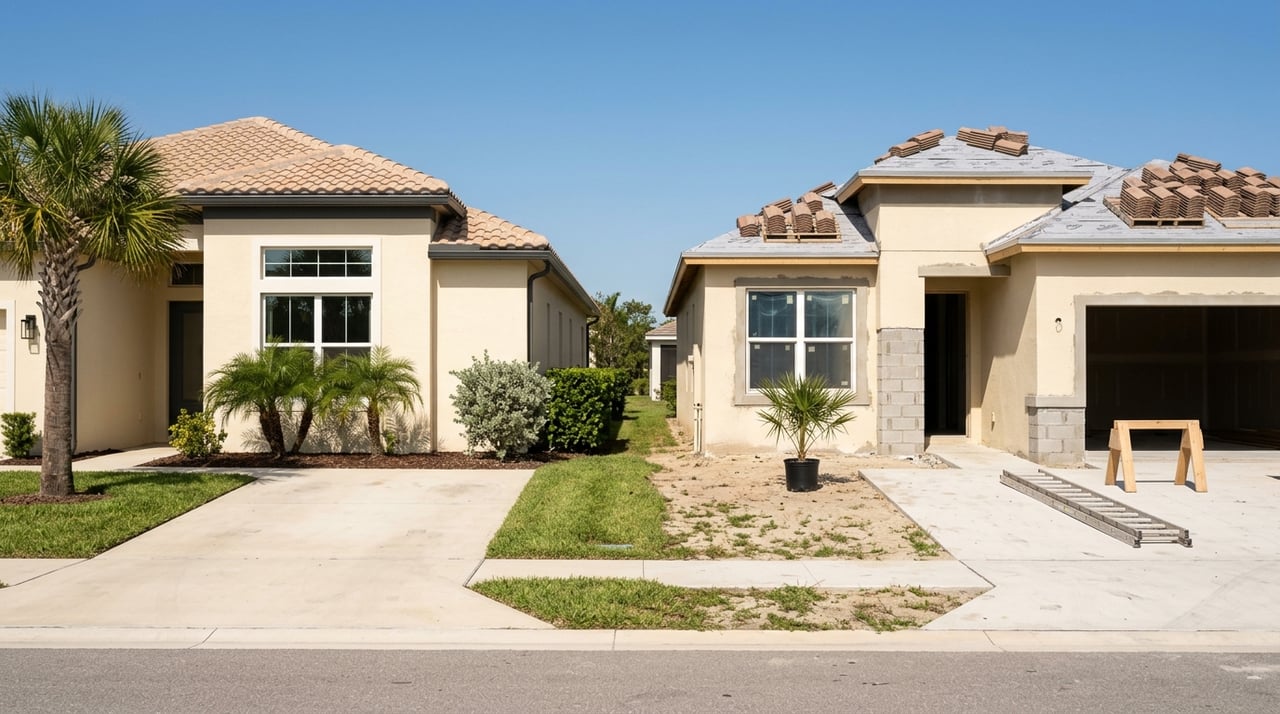
Retailers do not build ahead of population. They build behind it, and by late 2024, county data presented to Charlotte County commissioners showed the area around the Burnt Store Road corridor had already permitted more than 5,000 new housing units since mid-2023. A county planning and zoning official summed up the logic bluntly to a local news outlet: the rooftops bring the people those businesses need, and until the rooftops exist, the stores will not.
That explains the years-long gap between houses closing along Burnt Store Road and anything resembling a grocery store showing up to serve them. It also explains why a coalition of residents, not a developer, ended up doing the legwork to change it.
What Just Got Approved, And What Hasn't
The Burnt Store Road Corridor Coalition has spent years pushing county and state officials for basic services along the corridor, holding town halls that mix infrastructure updates with storm preparedness, including one session where the guest speaker was Matt Devitt, chief meteorologist for WINK News, alongside Charlotte County and City of Punta Gorda officials.
That advocacy produced a concrete result on April 13, 2026, when the Charlotte County Planning and Zoning Board voted 3 to 0 to recommend approval of a 195,000 square foot shopping center on Burnt Store Road, part of a larger 277.75 acre development east of the road. The site plan pairs the retail with up to 999 homes and as many as 300 recreational vehicle units, while preserving roughly 92.6 percent of the property's wetlands under conditions from state and federal wildlife agencies. The recommendation moved next to the Board of County Commissioners for an adoption hearing calendared for May 26, 2026.
Frank Petrosino, who represented the Corridor Coalition at the hearing and lives in Heritage Landing further up the corridor, told the board plainly what the project would mean for people who currently drive US 41 for groceries and basic errands, calling it a project that would be "a benefit for those of us residing at Heritage Landing" and the homes still to come.
Other residents at the same hearing were specific about their wish list, floating a Publix, a Starbucks, and a small gas station as the kind of everyday stops they would rather find a few minutes from home than twenty. None of that is locked in yet. The vote in April was a planning board recommendation, not a signed lease or a groundbreaking, and no tenant list or construction timeline has been made public. What is confirmed is that the land use and zoning framework has cleared a major hurdle after roughly two years of coalition pressure, stormwater and environmental review, and a prior concept plan that had actually expired back in 2008 before being revived.
Reading The News Like A Neighbor, Not A Headline
If you live in Burnt Store Meadows, this project is not really about your own commute to the store. Your own POA already lists shopping centers and restaurants among the conveniences within easy reach. The reason this still matters on your Friday nights is that the same coalition newsletters, town halls, and county meetings that produced the April vote are the backdrop against which your neighborhood built its own alternative. Food Truck Fridays did not start because Burnt Store Meadows lacked options nearby. It started, and kept going, because the corridor it belongs to has been defined for years by exactly this kind of long wait between rooftops and retail, and a greenbelt with a hibachi truck was a faster fix than a zoning hearing.
That is also why the shopping center news is worth tracking even if you never plan to shop there yourself. A 195,000 square foot center anchored somewhere along Burnt Store Road changes traffic patterns, changes which errands your neighbors run locally versus down at the existing Burnt Store Marketplace on US 41, and eventually changes what gets talked about over folding chairs at the next Food Truck Friday. For now, the greenbelt is still doing the job a shopping center hasn't finished doing yet.
What To Watch Next
The practical next steps worth following are not complicated. The Board of County Commissioners took up the project's adoption hearing in late May 2026, and the outcome of that vote determines whether the site moves toward site plan approval and an actual construction timeline. Separately, the Corridor Coalition's town halls remain the place where residents get the clearest read on both the retail project and the parallel effort to widen sections of Burnt Store Road itself, a project that in earlier updates was described as transferring from the Florida Department of Transportation to Lee County for the segment near the county line. Anyone who wants the real status, rather than a rumor passed around at the food truck line, can check the Charlotte County commission's meeting records directly.
None of this changes what Friday looks like this week. The truck will still set up at the Green Belt entrance off Royal Poinciana. The chairs will still face the window. But the fact that a neighborhood built its own restaurant night out of a maintenance easement says something specific about the place, not something generic about Florida living. It says the corridor's growth outran its stores, that a coalition of residents did something about it instead of just complaining, and that Burnt Store Meadows found its own answer while the rest of Burnt Store Road waited on a vote.
If you're a longtime resident who has ever wondered what will actually change once that shopping center clears its final approvals, or you know someone who has started asking those questions because they're thinking about their next move in this part of Charlotte County, the team at My Digital Listing tracks this corridor closely. Get your free digital listing plan whenever that conversation becomes real.