Thinking about leaving Florida for Greenville? Your housing budget may stretch differently here, but the bigger story is not just price. It is the mix of homes, neighborhoods, commute patterns, and monthly carrying costs that can make your move feel either simple or surprisingly complicated. This guide will help you understand what Greenville housing really looks like, how it compares broadly with Florida, and what to watch before you buy. Let’s dive in.
Greenville housing at a glance
If you are moving from Florida, Greenville will likely feel like a market with a broad middle rather than one single price point. In April 2026, the Greater Greenville Association of REALTORS® reported a median sales price of $315,000 and an average sales price of $401,678, with 4,938 homes for sale and 3.5 months of supply.
Other sources show a slightly different snapshot, which is normal because they measure different things. Zillow placed the average Greenville home value at $329,286 and average rent at $1,775, while Realtor.com reported a $385,000 median listing price, $1,895 median rent, and a 49-day median time on market.
The smart way to read these numbers is as a pricing band. For many buyers, Greenville’s housing market centers in the low-to-mid $300,000 range, but your actual budget will depend heavily on the part of the city and the type of home you want.
How Greenville compares with Florida
For a broad comparison, Florida Realtors reported a statewide single-family median sale price of $415,000 in the first quarter of 2026. That means Greenville’s local median sales snapshot sits below that Florida benchmark, although it is not a perfect apples-to-apples comparison because the Greenville figure reflects all property types and Florida separates single-family from townhouse and condo data.
That said, the comparison is still useful if you are trying to reset expectations. If you are selling in Florida and shopping in Greenville, you may find that your money goes further in some Greenville areas, especially outside the most in-town and high-demand neighborhoods.
Greenville is not one price point
One of the biggest mistakes Florida movers make is treating Greenville as a single market. It is not. Prices vary widely depending on whether you want a walkable in-town setting, a historic neighborhood, a newer suburban-style community, or a corridor location with easier highway access.
Realtor.com neighborhood data from early 2026 show how wide that spread can be. Median listing prices ranged from about $309,937 in Eastside and $349,000 in Dunean Mill to $485,000 in South Side, $499,900 in Pleasantburg, $725,000 in West End, $729,950 in Downtown Greenville, $884,950 in North Main, and about $1.01 million in the Augusta Street Area.
That means your relocation search should start with lifestyle first, then budget. If you begin with price alone, you may end up comparing neighborhoods that offer very different day-to-day experiences.
In-town living in Greenville
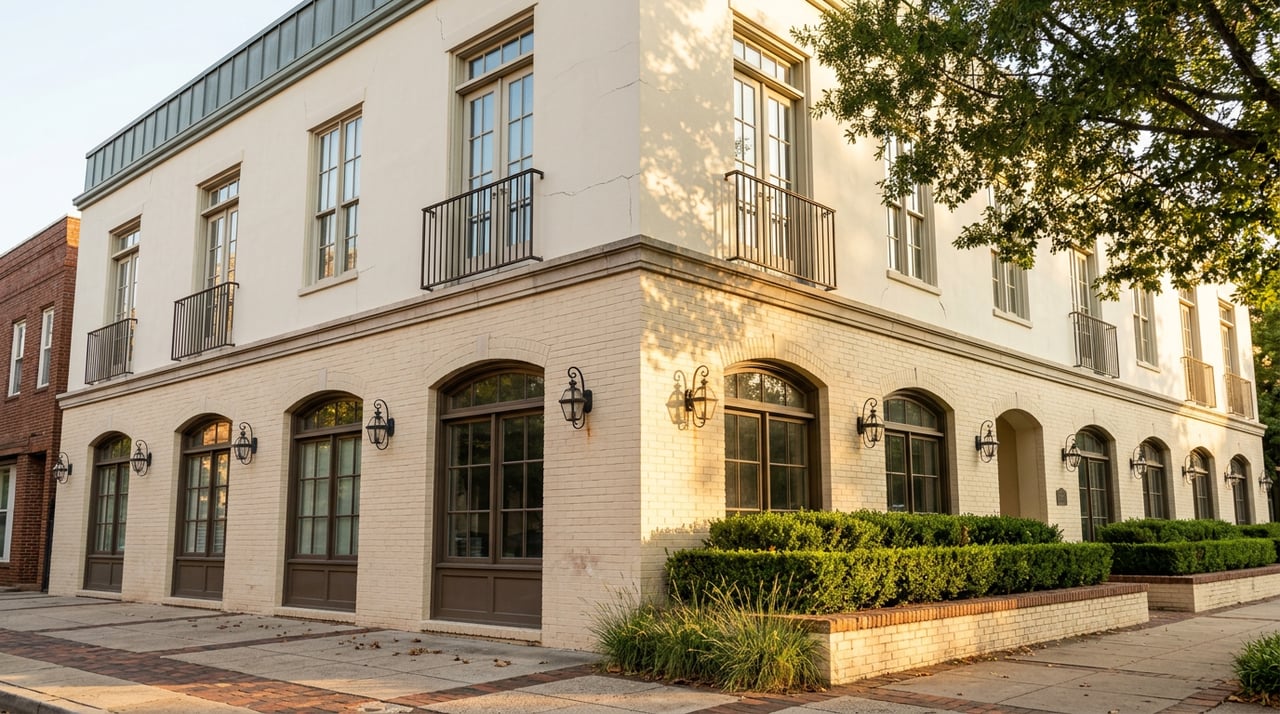
If you want a more walkable, amenity-rich lifestyle, the city core deserves a close look. Official city zoning categories support a mix of house-scale, neighborhood-scale, residential-multi, shopfront mixed-use, and mixed-use downtown development, which helps explain why in-town Greenville offers a varied housing stock.
In practical terms, that means you can find condos, townhomes, attached housing, and older detached homes in and near the core. This is often where Florida buyers who want less driving and more access to restaurants, parks, and events start their search.
Downtown Greenville is known for a tree-lined, walkable setting with Falls Park, Liberty Bridge, Reedy River Falls, museums, theaters, sports venues, public art, cafés, bars, and shopping. If your goal is to be close to activity and everyday conveniences, this part of the market may feel very different from a more car-dependent Florida suburb.
Historic neighborhoods and older homes
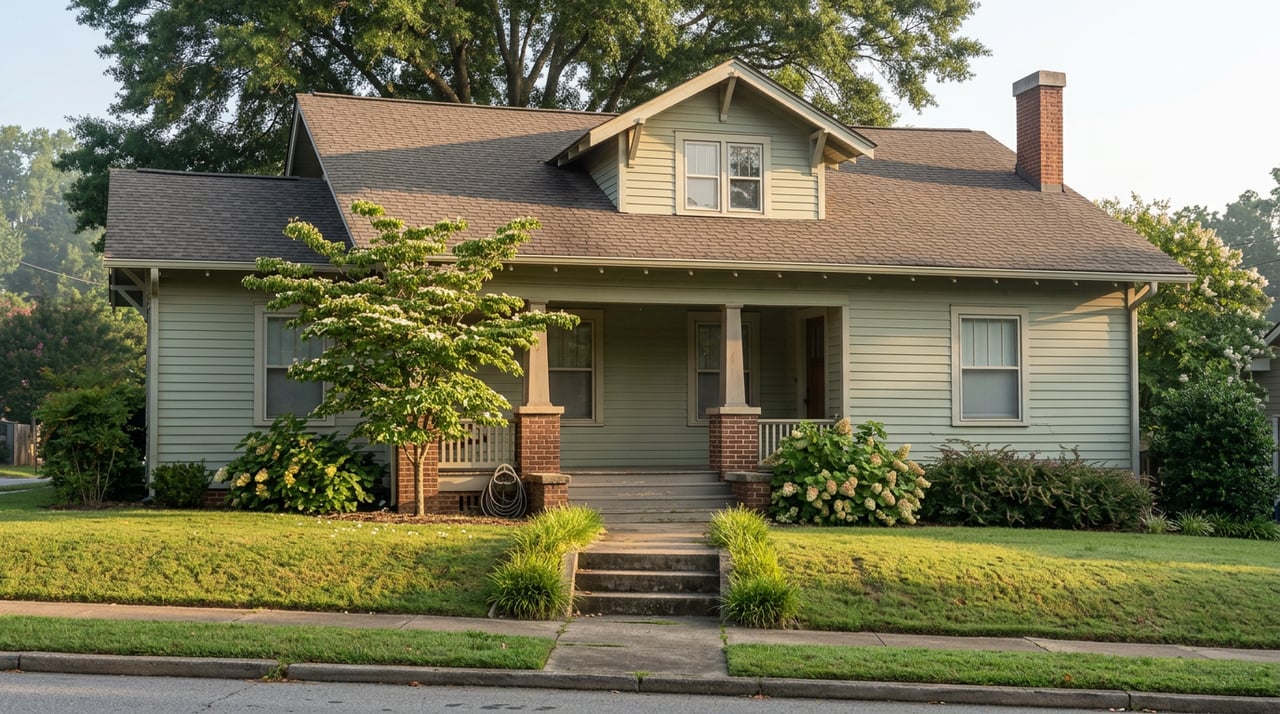
If charm and older architecture matter to you, Greenville has several officially recognized historic districts. The city lists areas including West End, Hampton-Pinckney, Pettigru, Overbrook, Heritage, East Park Avenue, and Colonel Elias Earle.
These areas can appeal to buyers who want established streetscapes and homes with architectural character. They may also come with pricing that reflects location, preservation appeal, and proximity to downtown amenities.
For Florida movers used to newer planned communities, this can be an adjustment. A historic-area home may offer more personality and a stronger in-town setting, but the housing style, lot pattern, and upkeep expectations can feel very different from newer construction.
Suburban and corridor-based housing options
Not every Greenville move is about downtown. Many buyers want easier parking, more car-oriented convenience, and a housing search centered around major roads and everyday retail.
In Greenville, places like Woodruff Road, Haywood Road, the Greenville Convention Center area, Roper Mountain Road, and Cherrydale/North Greenville function as major shopping and amenity corridors. These areas often make sense for buyers who want practical access to stores, services, and highways.
A useful way to think about the market is this: the urban core tends to emphasize condos, townhomes, and older detached homes, while the corridor and suburban ring more often align with newer detached homes, attached product, and HOA-managed communities. If you are relocating from Florida and are already familiar with planned neighborhoods, these outer areas may feel more familiar.
What commuting looks like in Greenville
Greenville is still largely a driving market, especially outside downtown. The city’s mean travel time to work is 19.9 minutes, which supports a short-to-moderate commute story rather than a long regional one.
Your drive time often comes down to corridor choice. Greenville is connected by I-85, I-185, I-385, U.S. 25, U.S. 29, U.S. 123, and U.S. 276, so access can vary a lot based on where you live relative to those routes.
This is one reason neighborhood selection matters so much. In-town locations may help you save time and rely less on major highway travel, while suburban locations may offer different home types and pricing but make access to key roads more important.
Transit and travel convenience
If you are hoping for a fully transit-driven lifestyle, it helps to set realistic expectations. Greenlink operates 12 fixed bus routes across Greenville County, plus ADA paratransit and a downtown trolley system. City information notes that bus routes do not run on Sundays.
For many residents, transit is a useful extra rather than the main way they get around. The free downtown trolley, which runs Friday through Sunday year-round, can be helpful in the core, but most of Greenville still works best if you plan on driving.
For Florida movers who expect regular travel back and forth, airport access is another plus. The city says Greenville-Spartanburg International Airport is about 20 minutes from downtown Greenville and offers six airlines, 49 average daily nonstop departures, and service to 15 major cities and 18 airports.
Lifestyle can shape your housing choice
Your home search is not just about square footage. In Greenville, lifestyle can strongly influence which area makes sense for you.
If you want walkability and frequent access to parks, restaurants, and events, downtown and nearby in-town neighborhoods may be your best fit. If you want a more suburban routine with a stronger focus on driving, shopping corridors and outer neighborhoods may offer more of what you are used to.
The Swamp Rabbit Trail also adds another layer to the decision. The city describes it as a 28-mile greenway connecting Travelers Rest with the City of Greenville along the Reedy River and city parks, which can be a meaningful feature if outdoor access is high on your list.
HOA dues and taxes matter
For Florida buyers, this is one of the most important budget conversations. In South Carolina, sellers must disclose whether a property is subject to an HOA on the Residential Property Disclosure Statement, and state HOA guidance explains that budgets, document access, and some notice rules are governed by South Carolina law.
That means HOA status is not just a neighborhood detail. It can affect your monthly costs, the documents you need to review, and how you compare one home against another.
Property taxes also require a closer look than many out-of-state buyers expect. Greenville County says millage rates vary among 136 tax districts, and county property tax is based on property value, assessment ratio, and millage.
The practical takeaway is simple: do not compare homes by purchase price alone. You should look at price, HOA dues, and tax district together to understand what a home will really cost you month to month.
A smart way to narrow your search
If you are relocating from Florida to Greenville, start by answering a few practical questions before you look at homes. This can save you time and help you avoid falling for a property that does not fit your daily life.
Ask yourself:
- Do you want walkability or easier driving access?
- Are you open to condos or townhomes, or do you want a detached home?
- Would you rather live near downtown amenities or near major retail corridors?
- Are HOA dues acceptable if they come with lower-maintenance living?
- How important is district-specific tax cost in your monthly budget?
Once you know those answers, your home search becomes much clearer. You can focus on the right part of Greenville instead of trying to compare every option at once.
Why this move feels different
The strongest case for Greenville is not that it is simply cheaper than Florida. It is that Greenville gives you a different balance of housing styles, neighborhood patterns, and lifestyle choices.
You may find a lower broad pricing baseline than Florida’s statewide single-family median, but you will also find in-town Greenville neighborhoods that reach well above the citywide middle. That is why a successful move depends less on chasing the lowest number and more on matching your budget to the way you want to live.
If you want help comparing in-town neighborhoods, suburban options, or the true monthly cost of different property types, working with a team that understands both Florida and Greenville can make the transition much easier. When you are ready to plan your move, connect with Jennifer & Philip Taberski for practical, relocation-focused guidance.
FAQs
What is the typical home price range in Greenville, SC?
- Greenville is best understood as a broad low-to-mid $300,000 market overall, but actual pricing varies widely by neighborhood, with some in-town areas far above that range.
Is Greenville, SC cheaper than Florida for homebuyers?
- In broad terms, Greenville’s local median sales snapshot is below Florida’s statewide single-family median reported for Q1 2026, but exact comparisons depend on property type and neighborhood.
What types of homes can you find in Greenville, SC?
- Greenville offers a mix of detached homes, townhomes, condos, attached housing, and mixed-use residential options, with more urban product in the core and more suburban-style choices in outer areas.
Are Greenville neighborhoods walkable or car-dependent?
- Downtown Greenville and some nearby in-town areas are more walkable, while many outer corridors and suburban areas are more car-oriented.
Do HOA fees matter when buying a home in Greenville, SC?
- Yes. HOA status affects disclosure, documentation, and monthly carrying costs, so it should be reviewed alongside purchase price and taxes.
How do property taxes work in Greenville County, SC?
- Greenville County property taxes vary by tax district and are based on property value, assessment ratio, and millage, so two similar homes can have different tax costs.
Is public transit useful in Greenville, SC?
- Greenville has public transit, including 12 bus routes and a downtown trolley, but most of the market still functions primarily as a driving area outside the core.